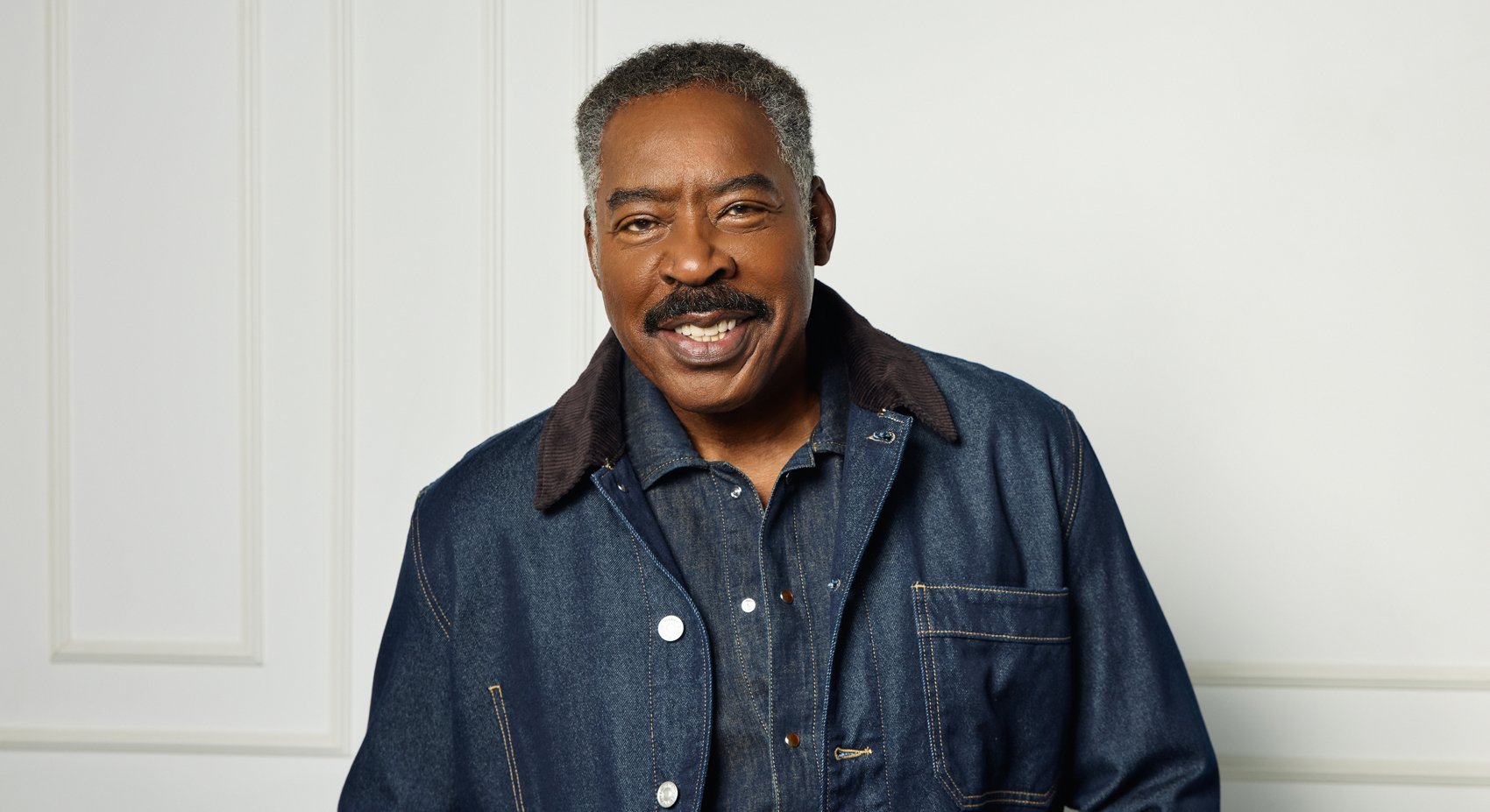
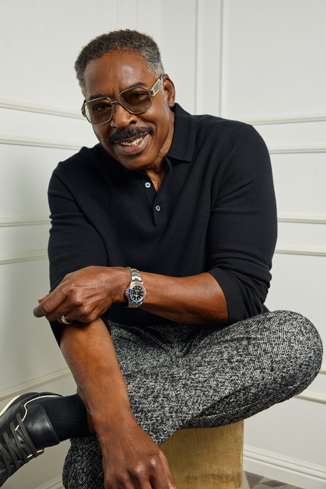
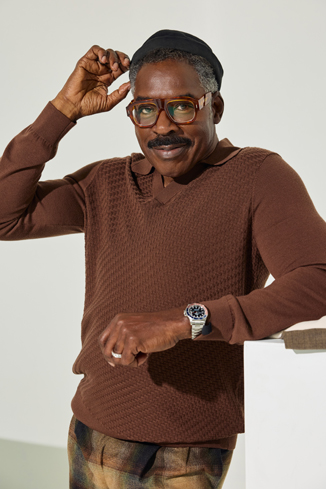
Ask Hudson to choose the opening image of this story and he goes back to a church bench in Benton Harbor.
“I’d say sitting on the front pew of the church with my grandmother’s Bible,” he says. “And I have on my one suit that I went to church in… when I think of my childhood, that’s what I see mostly.”
He grew up, as he’s said many times, “with a lot of love but not a lot of money.” But when you frame his childhood in terms of escape—of imagination as a “ticket out”—he gently shifts the lens.
“I never… I don’t know if I ever realized that,” he says. “I just always believed that it wasn’t a matter so much of getting out, [but] a matter of walking clear. You know, there’s the Lord’s Prayer—‘though I walk through the valley of the shadow of death.’ So I always felt that I was okay. I just never imagined being trapped in a bunch of insanity. So my imagination was always… I guess I’ve always seen myself as being okay.”
The point, even back then, was not to run but to move through—head up, eyes forward.
Along the way, a few people outside his family saw something in him that he hadn’t yet learned to name.
“The first acting class I took in college, I had a couple of instructors who really… somehow I was in a class with a bunch of other people, but they saw something different in me,” he recalls. “They had faith in me. And sometimes I just had faith for myself. I didn’t question my right to be there.”
He remembers their names like a roll call:
“A guy named David Regal, another named Earl Smith,” he says. “They were with the Black theater program. They were always very supportive and encouraging.”
A short stint in the Marines, a long road back
Before theater, before film, there was the United States Marine Corps—briefly.
“I joined the Marines. I was only there for, I think, ten weeks,” Hudson says. “I was discharged—medical discharge. I had asthma.”
It was, he notes, “at the very beginning of the Vietnam War, which I didn’t know about when I signed up. I found out about it after I got there.”
The experience left him with a few sharp impressions.
“I don’t know if I drew a lot from the Marine Corps, other than there are some very scary people on the planet that you would rather stay away from,” he says. “I thought it was a clear path. And then once that was over, it just made me aware that I had to find another way to move forward.”
“Another way” did not arrive with a trumpet fanfare. It arrived with responsibility.
“When I finished high school, I joined the Marines,” he explains. “I was there for most of the summer and then I was discharged, and I was back home in the projects. And I married a girl who was having some difficulties at home and suddenly I found myself married. And then she got pregnant and I’m expecting a child. I’m in the middle of it and I felt like my whole life was suddenly over.”
He laughs a little when he says it, but the weight is there. The exit ramp was education.
“I eventually got into college in Detroit, Wayne State University, and it was there that I discovered theater,” he says. “I got involved in theater and got started on that path.”
Once the path appeared, he stayed on it.
“I got into the theater in ’67,” he says. “Once I discovered theater, I did about ten years of just theater work.”
The early film work came after years of stage.
“The first movie I did—what we’d call a ‘real’ movie—was Leadbelly with Gordon Parks,” he says. “We shot it in Texas, and that was in ’73, I think. That was the first real movie acting. I did some local TV stuff in Detroit, but that was the first real entry into film.”